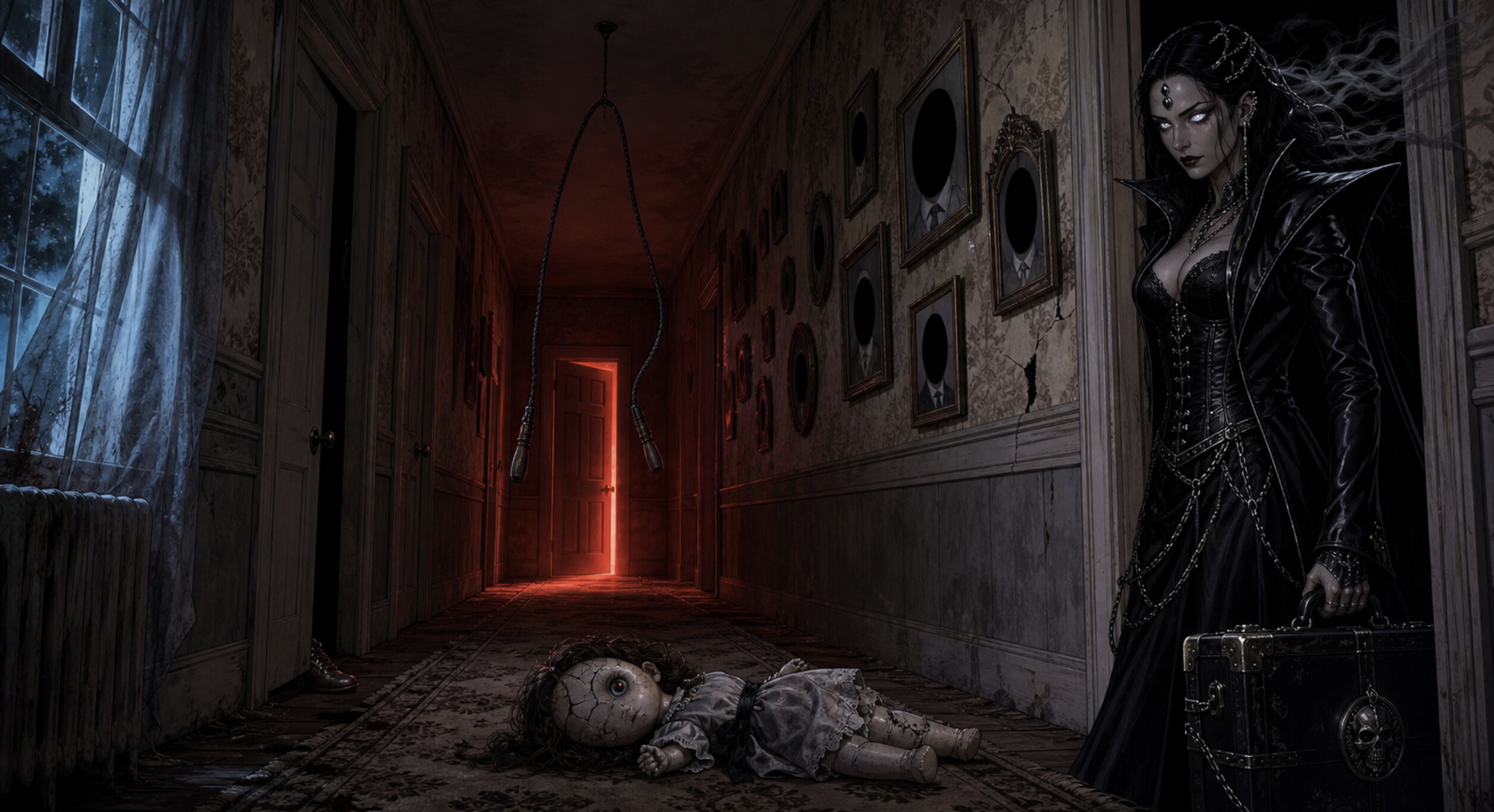
There's a reason horror keeps reaching for hide and seek. It's the one game everyone has played, the rules are older than any of us, and it contains a small, real dread that never fully leaves: the moment you're hidden, holding your breath, and you hear the footsteps get closer. In 2026, that moment has become a whole aesthetic.
The liminal turn
Modern horror moved out of the haunted house and into the ordinary house at the wrong hour. Empty hallways, fluorescent-lit rooms with no people in them, the backrooms, the pool at 3 a.m. — the whole "liminal spaces" movement is really one feeling: you are somewhere you should not be alone, and something is. Hide and seek is the childhood version of that exact feeling, which is why the two fused so naturally. A dark hallway of dead nurseries is scarier than any dungeon, because you were supposed to be safe there.
Why the game is a perfect trap
Hide and seek works as horror because it inverts comfort. Every element is domestic — a closet, a counted number, a child's voice calling ready or not — and every element can be turned. The seeker is patient. The hider is helpless by design. And the game only ends when you're found, which means the whole structure is built on dread with a guaranteed payoff. Writers love it because it does the tension for them.
It's also a trust game, and that's the darker read. You hide because you believe the person seeking you means you no harm. Break that assumption and the game becomes something else entirely. That's the switch that horror keeps flipping.
EXORCISTA turns the game on its owner
The newest episode of EXORCISTA: Games of Souls builds an entire soul-collection around it. A family vlogger named Diana Wells — a mom who filmed her three children for an 18-million-subscriber channel — dies and wakes in a corrupted "perfect family" house: an endless hallway of ring-lights, toys, and switched-off nurseries. The demon running the game is Lilith, and the game is Hide & Seek. The three children are hiding from the cameras. Each one found is a moment their mother filmed and sold.
The genius of it is that the game indicts the crime. These are children who spent their real childhoods hiding from lenses, and now the whole afterlife is that, made literal. Then Exorcista walks in, takes the game away from the demon, and plays it herself — find all three children and the soul goes free. She does. The horror resolves not with a jump scare but with a mother reaching over to switch off the last camera herself.
For the mythology underneath the demon, our Lilith explainer traces why the night-mother is the exact right monster for a game about hidden children. For the full episode, see the EP3 breakdown.
The one detail that stays with you
The show never puts the fear on the children's faces. It puts it on a toy — a worn beige rabbit with one button eye and a ring-light burn on its ear — sitting alone in an empty room while the counting continues off-screen. That's the whole trick of hide-and-seek horror in one image. The scariest thing isn't the seeker. It's the empty space where someone small used to be, and the silence that means the game is still going.
Ready or not.