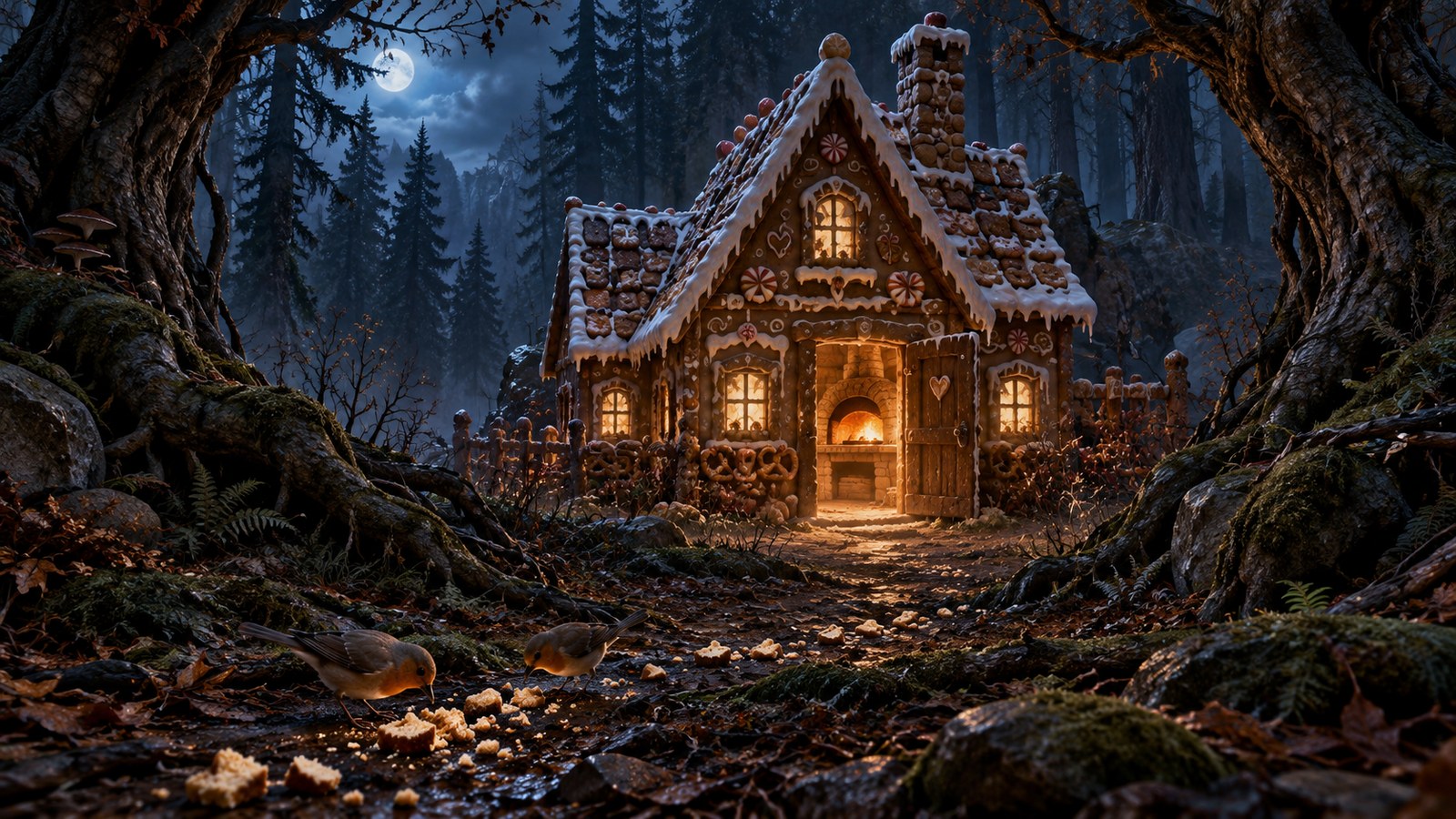
The witch does not get the first chance to kill Hansel and Gretel. Their parents do.
Before the edible house, before the cage and the oven, two hungry children lie awake and hear adults discussing how to get rid of them. That is where the Hansel and Gretel original story begins. The forest comes later. So does the woman who plans to eat them.
The Brothers Grimm’s tale is often remembered as a warning about taking sweets from strangers. Read it in full and that lesson starts to look small. The children have already learned that a familiar voice, a shared roof and a promise of breakfast offer no guarantee of safety.
Which original story are we talking about?
Hansel and Gretel is tale number 15 in the Grimms’ Children’s and Household Tales. Its first printed version appeared in 1812. The brothers revised their collection repeatedly, so there is no single Grimm text that stayed untouched from first publication to the familiar later editions.
One change matters enormously. In the early version, the woman who proposes abandoning the children is their mother. Later editions introduce the stepmother. D. L. Ashliman’s side-by-side comparison of the 1812 and 1857 texts shows how the wording changed, including the traces of “mother” that survived in the later text.
That distinction changes the wound at the centre of the story. A wicked stepmother fits a familiar fairy-tale category. A mother who weighs her children against the household food supply is harder to put at a comfortable distance.
For the sequence discussed below, the reference is Margaret Hunt’s English translation of the Grimm tale. It is a particular edition, rather than a claim to have recovered the first time anyone told the story aloud.
The children are abandoned twice
The first plan fails because Hansel has overheard it. He gathers pale stones and drops them along the route into the woods. Moonlight makes the way home visible. The children return to the household that sent them away.
On the second journey, he has bread instead of stones. Birds eat the crumbs. A resource that could have kept the children alive for another hour becomes an unreliable map.
Even the sound of their father working nearby is a deception. A branch knocking against a tree stands in for his axe. He does not simply leave; the adults arrange for the children to believe that he is still close enough to come back.
The details are practical and mean. A locked door prevents Hansel from gathering more stones. A scrap of bread has to serve two purposes. Sound creates the impression of a parent who is no longer there. The terror does not require an elaborate monster.
Why the house is made of food
By the time the children reach the witch’s house, hunger has become the story’s organising force. They are not looking for an adventure. They need something to eat.
In Hunt’s translation, the house is made of bread and cakes, with windows of clear sugar. “Gingerbread house” is useful shorthand for the image many readers know, but it is worth noticing what the actual text offers: a whole building that can be eaten.
The witch’s hospitality answers the children’s immediate needs. Food. Beds. A reassuring welcome. She provides what their own home has withheld, then reveals the price. Hansel will be fattened for a meal; Gretel will work for the woman who intends to consume her brother.
This is an especially cruel reversal. The children are starving, the house promises abundance, and the apparently generous adult regards a child as another ingredient.
Gretel changes the ending
Hansel’s trick with the small bone buys time. The witch feels it instead of his finger and believes he is still too thin. It delays the meal; it does not end the danger.
Gretel has to make the next decision. When the witch orders her to check the oven, she pretends not to understand how to get inside. The witch demonstrates. Gretel pushes her in and closes the door.
The girl who has been assigned chores becomes the person who recognises a procedure and turns it against the adult giving the instructions. No prince arrives. Their father does not find the house. Gretel opens her brother’s cage herself.
The children take the witch’s treasures and make their way home. The woman who wanted them gone has died. Their father welcomes them, and the riches remove the household’s poverty. The ending grants security, but it does not make the earlier abandonment disappear from a reader’s memory.
A frightening story to hear as an adult
Among Grimm fairy tales, this one remains unusually direct about dependence. Children need adults for food and shelter. Every adult in the central action misuses that dependence, until the children find ways to act for each other.
That is an adult reading of the tale, grounded in its repeated transactions around food. It does not require treating the story as a literal record of one historical famine, or assuming that every dark fairy tale began as a secret true-crime report.
If you seek scary bedtime stories for adults, this is what a complete reading restores: the wait between the first abandonment and the second, the false reassurance of the knocking branch, and the work Gretel must do before anyone calls the ending happy.
Read and listen without skipping the beginning
Dark Fairytales brings the original stories of Grimm, Andersen and Perrault to an adult audience, read in full in English by Victoria Unikel. The Hansel and Gretel episode page carries its source information and release status. At publication, that reading is scheduled for November 6, 2026.
The first released reading is The Red Shoes, available as video and podcast. For another tale whose familiar ending leaves something out, read The Little Mermaid’s original ending.
Sources and edition note
- Brothers Grimm, Household Tales, translated by Margaret Hunt: Hansel and Gretel.
- D. L. Ashliman, University of Pittsburgh: comparison of the 1812 and 1857 versions.
This article discusses the story and its editions; it does not reproduce a modern copyrighted translation. The accompanying illustration is an editorial interpretation, not an image from a historical edition.